

Introduction
Vegetable oils are a core global food input used in cooking and processed foods, and changes in their prices ripple through everything from snacks to restaurant meals. For this reason, Indonesia’s April 8, 2026, announcement to accelerate its B50 (50% palm oil blend) biodiesel mandate is relevant to consumers. This policy shift won’t only affect a lone nation but could cause a supply shock that will remove a meaningful share of global export supply, tighten markets and raise prices across multiple oils.
What is Biodiesel?
Biodiesel blending refers to mixing palm oil with fossil diesel. Indonesia already has a B40 (40% palm oil blend) biodiesel mandate and had sought to move to B50 earlier this year before shelving the idea. However, rising global oil prices have given the policy new economic justification and spurred Indonesia’s Energy Ministry to revive the policy, with a partial rollout set in July 2026 and a full target by 2028.
Disruptions tied to the US-Iran conflict, particularly those to shipping in and near the Strait of Hormuz, pushed oil prices to a peak above $110 per barrel, before settling near $83 as of April 18, 2026, still well above the pre-conflict norm of around $70. These elevated prices have increased Indonesia’s incentive to limit its dependence on imported fuel. Expanding biodiesel allows the country to substitute a domestic commodity, palm oil, for an expensive foreign one, and helps insulate the nation from global fuel shocks.
Why Indonesia is Pushing B50 Now
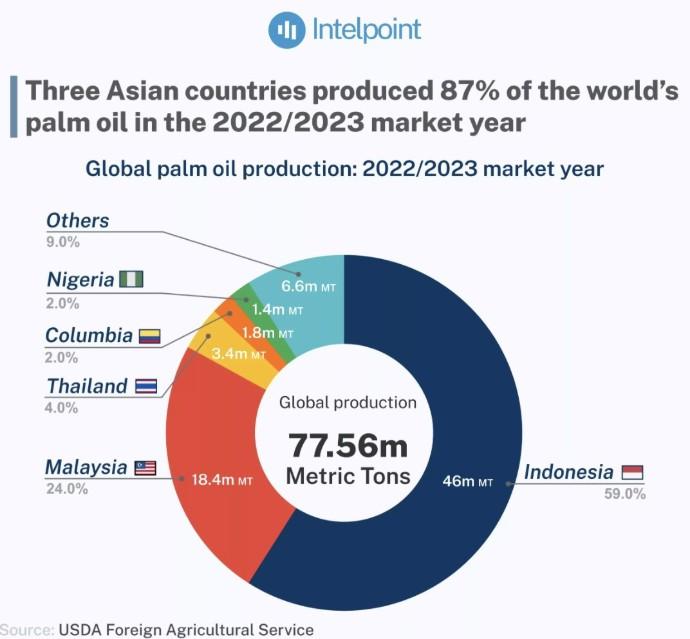
Indonesia is the world’s largest producer and exporter of palm oil, accounting for 50–60% of global palm oil production. This means shifts in domestic palm oil policy have large effects on the global market. Under B40, 23% of palm oil is already used domestically, and the B50 mandate would increase palm oil use to roughly 41% of total production. This would redirect a large share of supply away from global food markets and into domestic fuel use. The scale of the shock is significant as the shift would require an additional 6–8 million tons to be diverted, equivalent to 10–15% of global export supply. That’s a double-digit percentage shock to tradable supply, and even partial implementation (B45) would still tighten markets.
Indonesia is not acting alone. Thailand announced export restrictions on April 7, 2026, to support domestic biodiesel demand, while Malaysia is considering expanding its mandate from B10 to B20 or even B30. As Malaysia and Thailand are the second and third largest producers and exporters of palm oil, respectively, combining for roughly an additional 30% of global production and exports, these developments would add to a broader regional palm oil tightening.
Why Supply Cannot Easily Adjust
Oil palm trees take 3-4 years to start producing and about 7-10 years to reach peak yields. This means the 2028 target date will arrive well before supply can adjust to the change in demand. At the same time, both Malaysia and Indonesia face an aging tree population with decreasing yields, while small farmers, who make up approximately 40% of Indonesia’s palm oil production, have been delaying replanting due to high production and seeding costs. These factors, before the recent policy pushes, had caused Reuters to forecast Indonesia and Malaysian palm oil exports could drop as much as 20% by 2030.
These upstream constraints also limit how quickly Indonesia can implement B50. Biofuel refining is already operating near high utilization, meaning moving from B40 to B50 would require new investment and time to build additional processing facilities. Additionally, trade-offs in domestic consumption, such as diverting palm oil from cooking oil, could lead to food price inflation, potentially forcing government intervention or adjustments to the mandate. These factors have led analysts to suggest B45 may be a more realistic near-term target, but a B45 mandate would still significantly tighten the global export market.
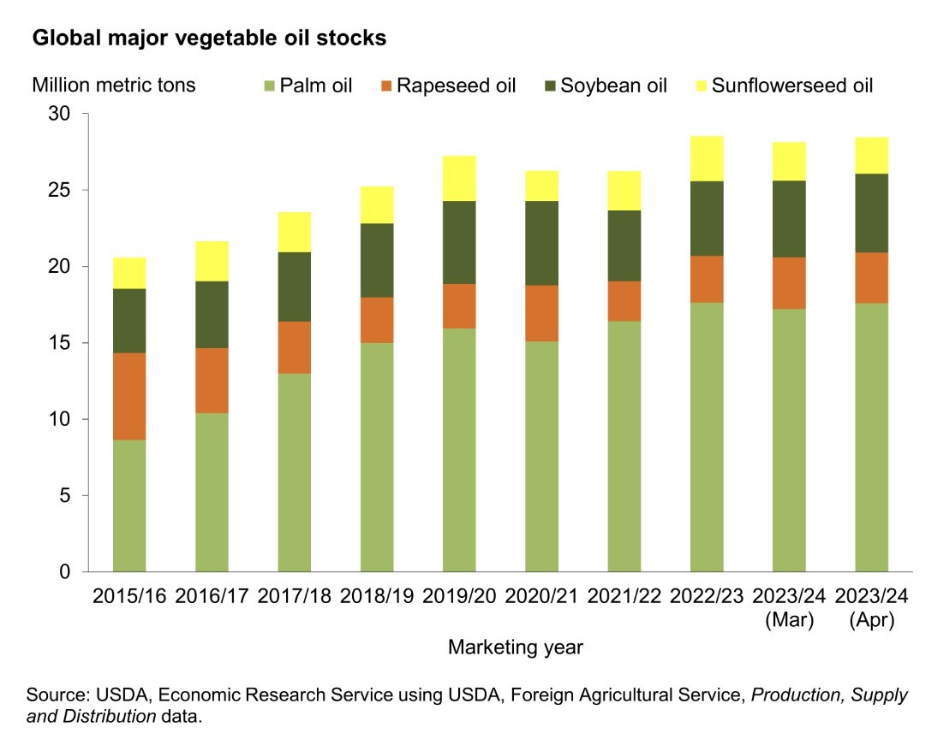
Furthermore, there’s a clear substitution effect in play: as palm oil becomes scarcer and more expensive, buyers will turn to soybean, rapeseed, or sunflower oil. Palm oil makes up 30-35% of global vegetable oil consumption, meaning price increases ripple across all major vegetable oils, affecting the entire edible oil complex.
Concluding Statement
Overall, Indonesia’s push towards B50, as well as neighboring countries and fellow large palm oil producers' own internal restrictions, would significantly reduce the global export market’s supply of a commodity that underpins roughly a third of global vegetable oil consumption. Even if the implementation eventually falls short of the B50 goal due to upstream and capacity restraints, there will still be a sizable reduction of palm oil available to importers. This shift will force global buyers to compete for a smaller export pool, driving up prices for palm oil and substitutes such as soybean, rapeseed, and sunflower oil. The result is a broader increase in edible oil prices and a downstream increase in food costs worldwide.
Data Sources
- "Indonesia's B50 Pivot Shows War Is Stoking Global Biofuel Demand," Bloomberg (2026)
- "Indonesia to launch B50 biodiesel in July 2026, saving 4 million KL of fuel," Palm Oil Magazine (2026)
- "Indonesia keeps 2026 biodiesel quota flat, raising doubts over B50 target," S&P Global Commodity Insights (2025) "B50 ambitions face supply risks without upstream palm oil reforms," Palm Oil Magazine (2026)
- "Indonesia to lift palm oil share in biofuels to 50% in 2026 to cut fuel import costs," Ecofin Agency (2026) "Palm oil price forecast and production outlook 2026," Fastmarkets (2026).
Disclaimer
This report is published by 6:05 Markets for informational purposes only and does not constitute financial advice, an offer to buy or sell securities, or an investment recommendation. The information contained herein has been obtained from sources believed to be reliable, but 6:05 Markets makes no representation as to its accuracy or completeness. Past performance is not indicative of future results. Readers should conduct their own research and consult with a qualified financial advisor before making any investment decisions. This report is intended for the named recipient only. Unauthorised reproduction or distribution — in whole or in part — is prohibited without the prior written consent of 6:05 Markets.
© 2026 6:05 Markets. All rights reserved.
Website: 605Markets.com Linkedin: https://www.linkedin.com/company/6-05-markets
Back to Agriculture Reports