Introduction
U.S. cattle inventories have fallen to 86.2 million head, the lowest in 75 years, triggering record futures prices and a supply crisis with no near-term solution. There has been a period of prolonged drought, high feed costs, and continued herd liquidation, discouraging herd expansion and reinforcing supply constraints across the market.
As of January 1, 2026, of the 86.2 million head, 27.6 million are beef cows, 1% fewer than the year prior. The calf crop has declined to 33.6 million head, one of the lowest on record. This reflects 7 years of sustained liquidation, with producers consistently selling faster than they breed.
The Catalysts
There are known drivers of this observed supply crisis. There has been a persistent drought across regions with high cattle production, raising the cost of maintaining animals on pasture. High feed prices have also lowered producers' margins, making it more rational and profitable to sell cattle rather than keep them in the breeding cycle. Heifer retention, the primary mechanism through which producers rebuild their herds, has remained stubbornly low because the financial incentives to sell have consistently outweighed the incentives to keep.
Beyond the headline inventory numbers, the short-term supply picture is equally concerning. The USDA's April 2026 Cattle on Feed report revealed that feedlot placements came in at just 1.71 million head, a 7% year-over-year decline and the second-lowest figure recorded since 1996. Marketings also fell 6% to 1.63 million head, which is among the lowest levels in history. A weak placement number today suggests tighter beef availability tomorrow, reinforcing the expectation that current supply constraints are unlikely to ease soon. To add to this shortage of domestic supply, the closure of the border between the United States and Mexico to cattle imports removed approximately 1.1-1.25 million feeder cattle from the annual supply chain, further tightening feedlot supply.
Record-High Market Prices
These supply dynamics are directly translating into record-breaking market prices. Live cattle futures reached record highs, surpassing the $250 mark, reaching $253.60 on April 14, 2026. This high was driven by historically tight supply and the strongest consumer demand for beef in 40 years. When supply is constrained, and demand remains high, markets are increasingly sensitive to external information and changes. In thin markets, even speculative headlines can produce large price swings. The cattle market today has a small margin of error, and more supply shocks will further destabilize prices. Rising input costs mean margins are now negative for meatpackers, showing that the consequences of this crisis extend to every party involved.
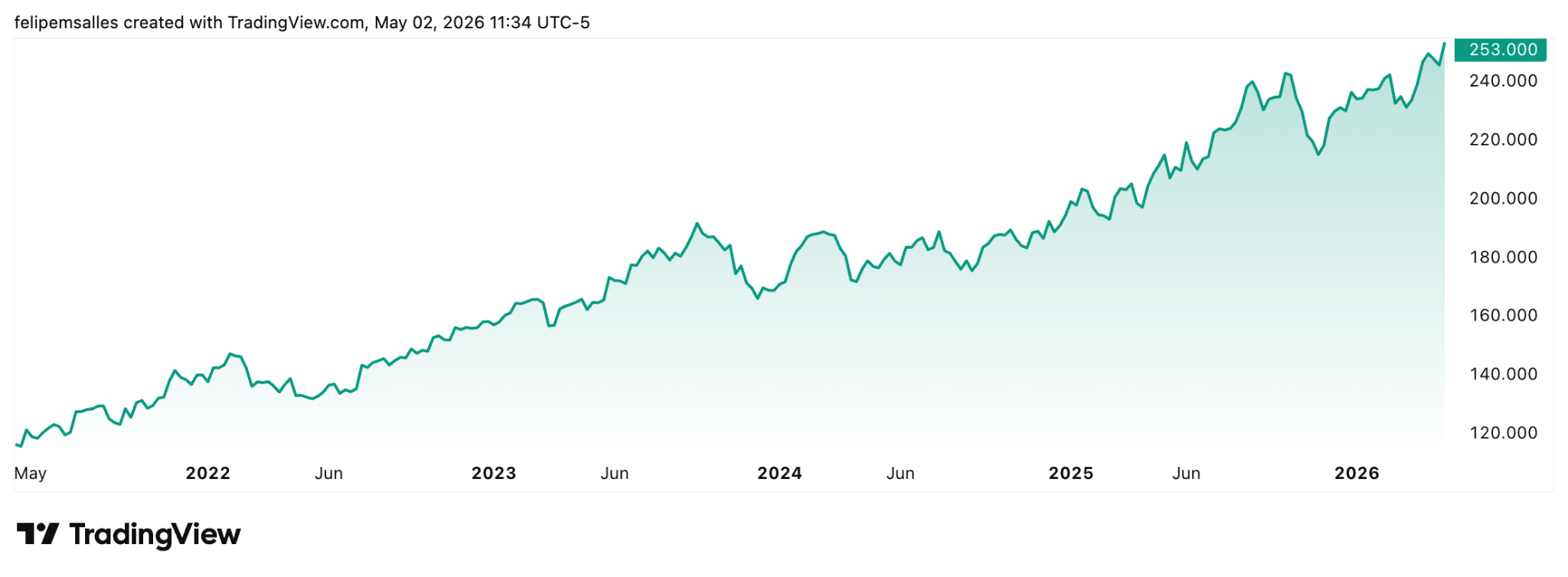
Source: TradingView
The Cycle May Be Turning
There are, however, signs that this cycle may be turning. Heifer retention has increased, indicating early signs of potential rebuilding. Nevertheless, the biological nature of cattle production limits the pace at which this rebuilding translates into true supply growth. Breeding and gestation cycles in cattle mean that after a decision is made, impacts will only be seen after over a year. It is projected that meaningful herd expansion will be expected only by 2027-2028. This timeline assumes normal conditions and no further supply-side shocks.
In the short-term, elevated prices and heightened-sensitivity to supply-side news are likely to persist. Because breeding and cattle are biological processes, there is no easy fix to the issue. Overall, the U.S. cattle market is constrained by both current and future supply, making the shortage unusually persistent, but the foundations for rebuilding are taking shape. However, until herd rebuilding materializes, elevated prices and supply-side volatility remain the base case.
Data Sources
- USDA — Cattle on Feed (April 17, 2026)
- USDA — United States cattle inventory down slightly
- American Farm Bureau Federation — U.S. Cattle Inventory Smallest in 73 Years
- American Farm Bureau Federation — Smaller Cattle Herd Creates Market Volatility
- AG Information Network of the West — U.S. Cow Herd Hits Smallest Since 1951; Recovery Possible by 2027–28
- Wisconsin State Farmer — Beef markets reach new highs on tight supplies, strong demand