

AI in Freight/Trucking
The freight industry moves over $9 trillion of goods annually, yet up to 28% of truck miles are driven empty. Companies in every major industry are adopting AI systems ranging from customer service to data configurations to stay competitive. The same applies to trucking and freight. Many freight and trucking leaders strongly view the utilization of AI as a necessary instrument to stay competitive in the industry. According to FedEx Freight CEO John Smith, “The key is the technology that we’re building [AI]. That’s where we are at a disadvantage, in my opinion.”
Recently, Smith and FedEx Freight announced a large-scale reshaping of their current business model to accommodate these AI processes. As of now, the inefficiencies that the freight company is seeking to amend lie predominantly in two areas: inefficiencies in billing and demand for freight. AI adoption in freight is lowering costs across large carriers, putting downward pressure on freight rates, and accelerating consolidation toward firms with the capital to invest in data and automation.
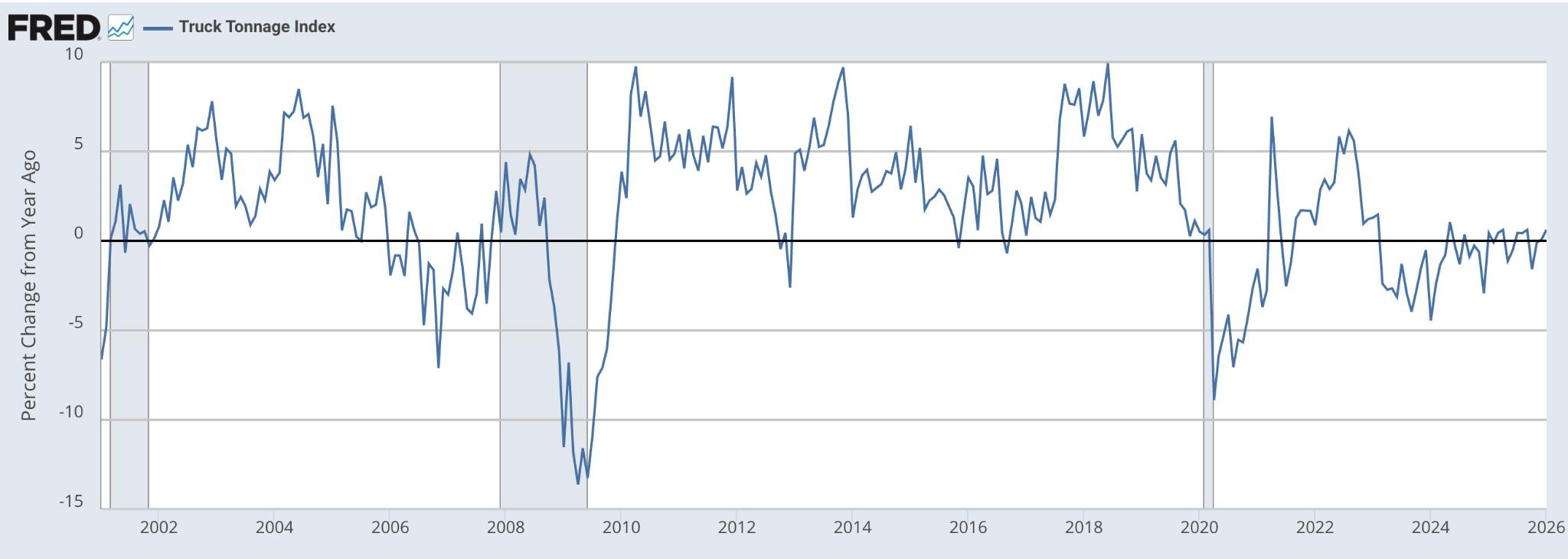
Inefficiencies in Billing
Whenever there is a discrepancy between the on-paper weight of cargo and the measured weight of the freight, the company must adjust the price shown on the invoice that is later sent to the consumer to accommodate for that dissonance. On average, the administrative labor required to resolve the issue costs the company $53.50 (IOFM). Scaled across hundreds of thousands of orders per month, this becomes a serious cost for the company. According to TTNews, FedEx Freight’s restructuring is to ultimately reduce human intervention in the company’s supply chain logistics process by 60%.
Demand in Freight
FedEx traditionally sells shipping contracts in a bundle of express (air), ground (trucking/vans), and freight. Freight has always been more difficult to sell because of its different billing specifications. Whereas express pricing was dependent on weight and distance, freight pricing was based on both density and the product’s classification. This made it harder for sales representatives to provide quotes for clients quickly. In FedEx’s current state, they simply do not have the technology required to compete with other freight providers that have models that can produce a freight quote in a fraction of the time. As shown through the case of FedEx Freight, the introduction of AI processes can cut down on labor costs as well as increase sales capabilities across the freight industry.
Route and Scheduling Efficiency
Companies are also exploring how AI can increase freight route and scheduling efficiency. According to Wahyd Logistics, “The global logistics industry moves over $9 trillion worth of goods annually by road, yet up to 28% of truck miles are driven empty.” The excessive mileage driven by freight carriers and loading delays, which are usually a consequence of subpar scheduling that prevents product from getting onto a truck fast enough, contribute to a truck carrying freight staying at a given loading dock for around three hours on average. According to TenTrucks, drivers doing four loads a week lose out on around $15,000 a year. The systematic inefficiencies do not just stop at the freight carriers. For trucking companies hauling essential manufacturing components for assembly lines like those used in automotive manufacturing, routing delays can cause these operationally maximized production floors to completely shut down; experts estimate the burden on the manufacturing company to amount to $50,000 a minute.
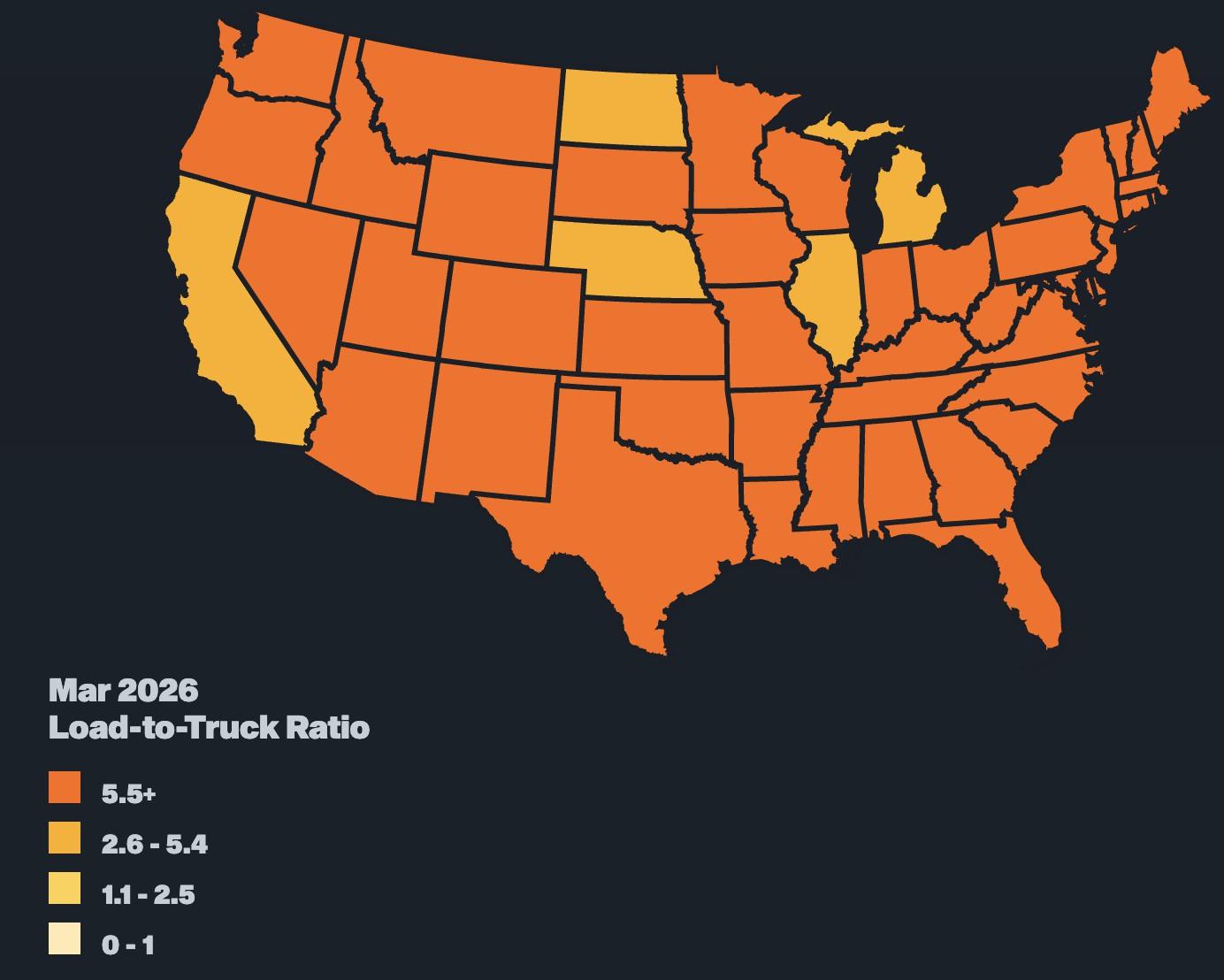
There are a range of issues along the supply chain that are caused by poor routing and scheduling. However, because of the rise of AI in logistics, the heavy losses incurred by the supply chain industry are beginning to shrink. According to Gartner’s 2026 Strategic Logistics Analysis, companies utilizing AI to automate real-time routing and scheduling are seeing a 34% increase in operational efficiency. By processing millions of variables that can affect the timeliness and productivity of freight transport, AI has the ability to model complex supply chain webs and organize the system into coordinated routing.
Labor Market Disruptions Caused by AI
Despite the benefits that AI has on the freight industry, many are still against its adoption. The primary concern is the job displacement that could occur. McKinsey Global Institute projects that professional trucking employment will fall from 3.8 million to 2.3 million by the end of the decade—a 1.5 million dip in purely the field of truck driving, without even accounting for back-end jobs present in the freight industry. A 2025/26 study from Equitable Growth found that for logistics managers across the country, “more than 90 percent of their tasks are susceptible to AI-driven automation, with nearly 100 percent of these classified as core activities, underscoring a substantial displacement risk.” By processing millions of variables that can affect the timeliness and productivity of freight transport, AI has the ability to model complex supply chain webs and organize the system to coordinate routing.
Furthermore, for the truckers who still have jobs, many are under the scrutiny of AI dash cams, intended to maximize driver safety and protect freight companies from any legal blame. Karen Levy, a sociology professor at Cornell University, describes AI dash cams and sensors not as safety assistants, but as tools of “intimate surveillance.” Her research details the sentiment that truckers hold toward these cameras. She documents drivers covering AI cameras with tape, using "GPS jammers," and finding ways to "beat the box." This large-scale job loss and growing resentment by truck drivers toward large conglomerates can lead to larger general inequality gaps and a demoralized workforce. As workers in both back- and front-office components of the industry are forced to take leave, the world risks labor market disruption and a sector reliant on AI processes, with a resultant lack of human intuition behind it.
Big Firms Win While Small Firms Lose
Furthermore, the benefits of AI disproportionately accrue to firms with the capital and data infrastructure to implement it effectively. Large, integrated carriers like FedEx Freight, which have advanced data systems and routing networks, will outperform smaller and mid-sized carriers lacking capital for AI investments. As large carriers reduce their cost per shipment, they gain the ability to undercut competitors on price, placing downward pressure on freight rates and compressing margins across smaller operators.
The freight and logistics industries are changing. With the rise of AI comes sharpened economic efficiencies throughout the supply chain. As a result, deadhead miles, billing discrepancies, and trucking detention are minimized. However, with these technical improvements come unique human losses. The presence of AI contributes to job loss and heightens workers’ distrust in companies. Thus, the industry finds itself at a crossroads. Ultimately, the success of AI in freight will not be measured solely by the reduction in deficiencies or the optimization of route efficiency, but by the industry’s ability to ensure that the AI does not completely replace the workforce.
Data Sources
- Freight Billing Errors: The 5 Most Expensive Mistakes Costing Your Company — ZDSCS (n.d.) How Intelligent Logistics Is Transforming Supply Chains in 2026 — Wahyd Logistics (2026) How to Reduce Cost Per Mile in Trucking — TenTrucks (n.d.)
- Why 99.9% On-Time Delivery Matters More Than Ever — James Group International (n.d.) AI by the Numbers: Logistics & Supply Chain — Inbound Logistics (n.d.)
- Agents, Robots and Us: Skill Partnerships in the Age of AI — McKinsey Global Institute (n.d.)
- Adoption of Generative AI Will Have Different Effects Across Jobs in the U.S. Logistics Workforce — Equitable Growth (n.d.)
Disclaimer
This report is published by 6:05 Markets for informational purposes only and does not constitute financial advice, an offer to buy or sell securities, or an investment recommendation. The information contained herein has been obtained from sources believed to be reliable, but 6:05 Markets makes no representation as to its accuracy or completeness. Past performance is not indicative of future results. Readers should conduct their own research and consult with a qualified financial advisor before making any investment decisions. This report is intended for the named recipient only. Unauthorised reproduction or distribution — in whole or in part — is prohibited without the prior written consent of 6:05 Markets.
© 2026 6:05 Markets. All rights reserved.
Website: 605Markets.com Linkedin: https://www.linkedin.com/company/6-05-markets
Back to Logistics Reports