
Introduction
Global warming, despite being an immensely pressing challenge the world faces, is not without its economic benefits. With geopolitical tensions often affecting trade routes in the Middle East affecting routes that constitute the backbone of modern trade, climate change presents an interesting opportunity. In recent years, due to ice melts around the Bering Sea, the North Sea and Siberia, a new trade opportunity has emerged from the molten glaciers: the Northern Sea shipping route.
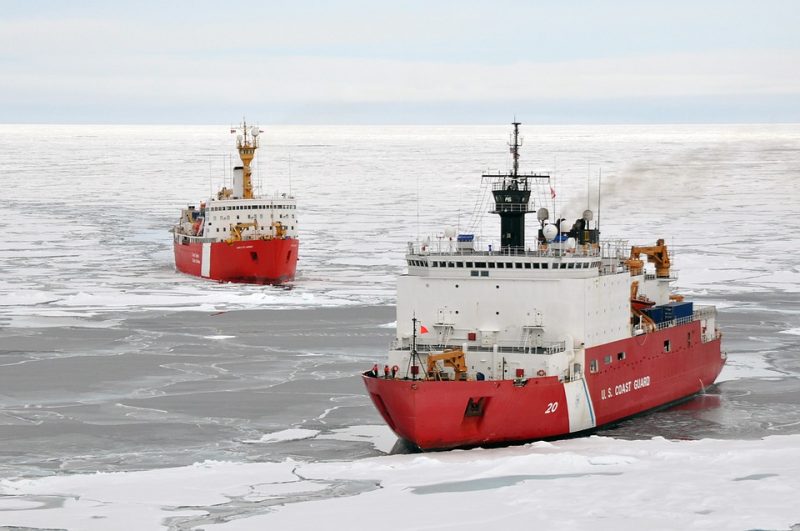
Image Source: Polar Research and Policy Initiative
Where is the North Sea Trade Route
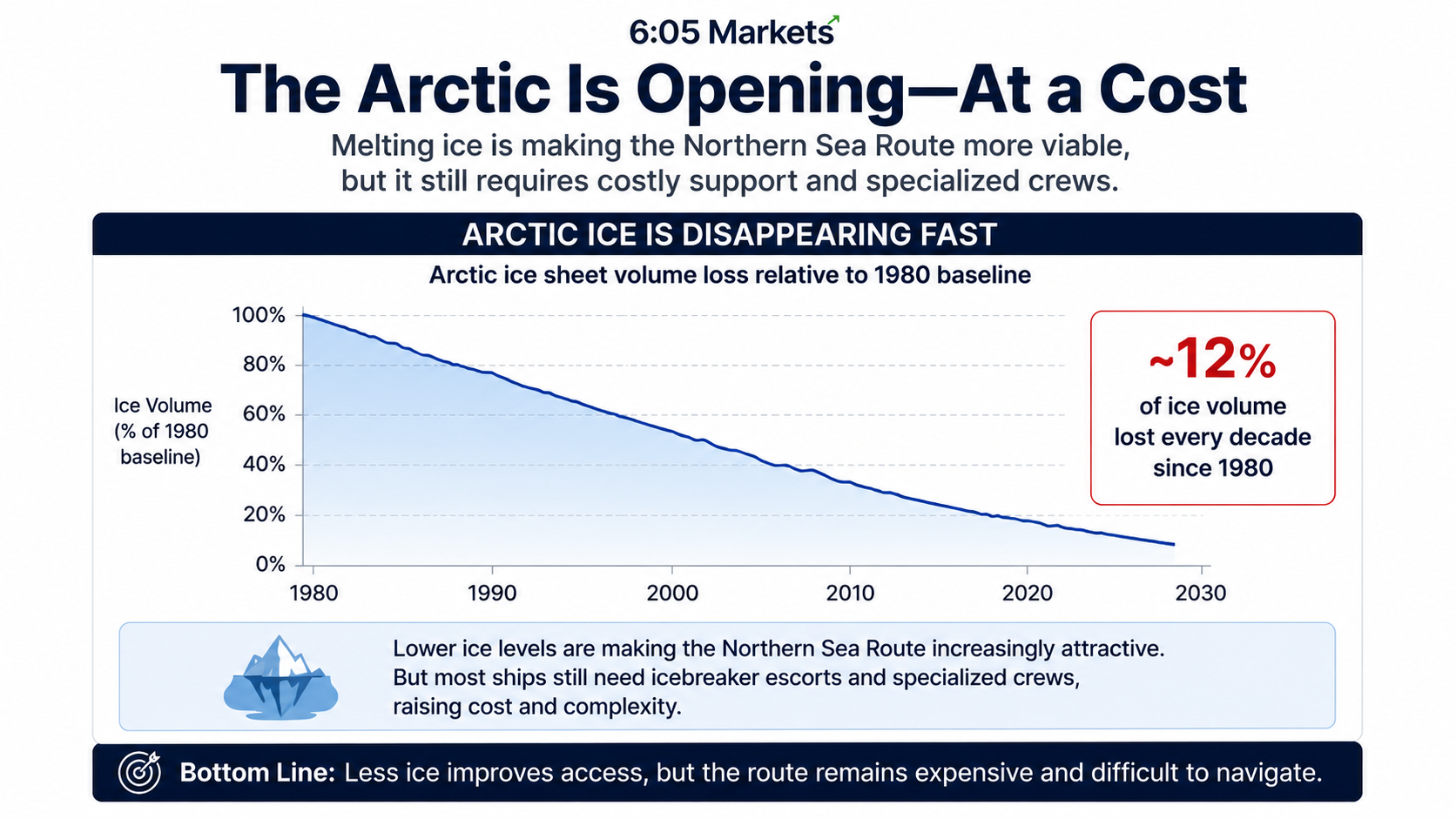
The Northern Sea shipping route spans from Kara Gate to the Bering Strait and the North Sea. It connects Russia and China to European markets, with most of the route passing off the coast of Alaska, through Russian-controlled waters. At the end of this route are the ports of Rotterdam in the Netherlands and Antwerp-Bruge in Belgium, two of the world's largest logistics hubs which would provide a swift and efficient transfer of Asian-produced cargo to the continent.
The route is much shorter than the current routes: Europe-Asia voyages through the Arctic Ocean range from 7,000-9,000 nautical miles, compared to 11,000 to 12,000 nautical miles through the Suez Canal and even more around the Horn of Africa. Since the route is significantly shorter than existing routes, it has economic and geopolitical benefits.
It can reduce costs, by reducing shipping times by 30-40% – cutting down fuel costs and allowing for more shipments to be made (as ships can go back and forth quicker). Moreover, the environmental arbitrages to be made are complex: despite this route only becoming viable because of global warming (more on that later), it also allows to save around 30-50% in CO2 emissions compared to other, longer routes.
Source: Arctic Portal
The route might provide a valuable alternative for Asian countries like Russia and China to connect with European markets, as on top of being located outside of direct US influence, it also runs through less chokepoints (contrary to the Suez Canal, the Persian Gulf and the Strait of Malacca, all critical to the Asian economic and energetic survival)
The Limitations
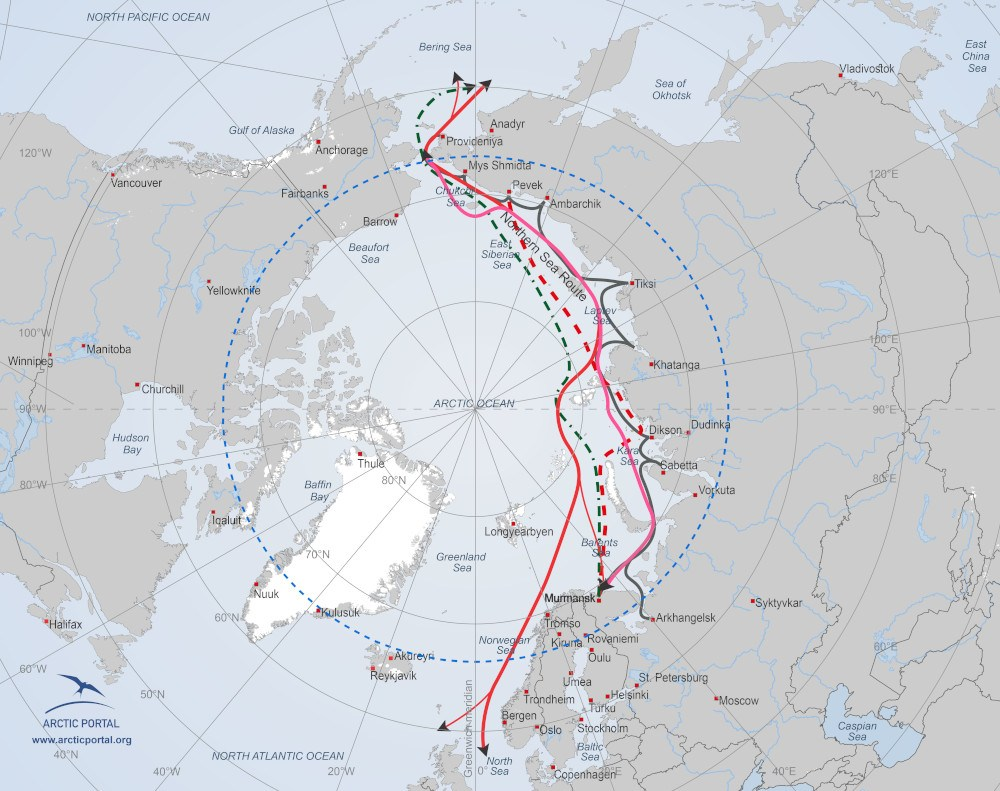
The route has obvious drawbacks. The biggest obstacle, and the main reason why companies have been favoring other routes until now, is the abundance of sea ice that covers the surface of the Arctic ocean. Recently, with global warming, the ice has been melting at alarming rates, with the ice sheet losing an approximate 12% of its volume every decade since 1980. With the current reduced ice levels, using the Northern sea route has become an increasingly attractive option, though boats and freight ships would be required to have icebreaker escorts and specialized crews to deal with the hindrance, requirements that would largely increase cost and complexity. In addition to these intrinsic risks, the route lies primarily in Russian controlled waters, requiring foreign ships to possess transit permits and ice navigation approvals.
Finally, if the route is to be used at the intensity that the market requires, is the lack of infrastructure. Europe, Russia and China have enormous ports, but so far most of these have been focused on other routes (such as the ports of La Pirée, in Greece, or Shanghai, in China, the largest port in the world). Rotterdam and Antwerp-Bruge are great stepping-stones, but more ports will need to be built, and the entire shipping ecosystem rethought, if the Northern Sea, the Barents Sea and the Kara Sea are to become the new Red Sea.
Russian and Chinese Investment
Russia, who controls most of the route, has invested significantly in arctic infrastructure and started developing nuclear-powered icebreakers – the only country to do so. Russia’s neighbor China, with whom it shares strong ties, who may use this route, has also dubbed the Polar Silk Road, to expand its global Belt and Road initiative to include the Northern Sea route. According to WITA, an international trade organisation, Russia and China signed a far-reaching agreement to jointly develop this Arctic passage on October 14, 2025, formalizing years of collaboration. This would provide China massive influence in the area, transforming the developing trading route into the northern backbone of its Belt and Road Initiative (which up until now was focused on traditional trading routes) and allowing it to diversify its geographic shipping lane portfolio to hedge against freight chokepoints like the Strait of Malacca or the Suez Canal in case of geopolitical instability or sanctions.
Geopolitics
The joint Chinese and Russian leverage worries countries like Canada and the US, who have stakes in the emerging trade route. Control of the route brings in massive amounts of income for the countries holding it and facilitates other endeavors such as oil prospecting in the area (the Arctic has long been coveted for its reserves of oil and gas). Thus, the US has recently argued that parts of the route function as international straits, in order to curb the direct influence of individual countries.
Conclusion
The Northern Sea trading route could offer a tremendous opportunity, but also is the symptom of failing geopolitical and environmental guarantees. The trade rate made possible through melting ice would reduce shipping time and ultimately costs, but is constrained by the remaining ice, higher insurance premium, and lack of infrastructure. As it continues to develop, it will irremediably crystallize geopolitical tensions between global superpowers and could potentially end up just like all of its sister routes: a chokehold.
Data Sources
- WebInland Ocean — Northern Sea Route guide
- Middlebury Institute of International Studies — "Cold Calculations: Economic Prospects for Arctic Shipping Routes," working paper,
- WITA — "The Polar Silk Road That Could Sideline the West," Russia-China NSR development