
What has happened?
European wind power has started looking less like a narrow clean energy story and more like a strategic response to a volatile energy market. Across France, Germany and the UK, recent developments have shown that wind is being treated not only as a way to cut emissions, but also as a tool for reducing exposure to imported fossil fuels, lowering vulnerability to external supply shocks, and strengthening domestic industrial capacity. France has launched a major new renewable tender round with explicit “Made in Europe” ambitions, Germany has seen exceptionally strong demand for onshore wind capacity, and the UK has already shown how higher wind output can help shield a power system from the worst effects of an oil and gas shock. The UK is currently fast-tracking offshore wind, bringing forward the AR8 auction round to July 2026. Taken together, these developments suggest that wind power in Europe is now being valued on three levels at once. It remains central to decarbonisation, but it is increasingly also being used as a hedge against geopolitical energy disruption and as part of a broader industrial strategy. Wind is no longer being framed only as environmental policy, but as economic resilience and energy security policy as well.
What are the Catalysts?
The immediate catalyst is the renewed fossil-fuel shock caused by the Iran war and disruption to flows through the Strait of Hormuz. Reuters reported that France explicitly linked its new tenders to the need to wean itself further off imported oil and gas, while the UK example showed in real time how a wind-heavy electricity mix can reduce exposure to surging gas prices when geopolitical disruption hits. In other words, the current crisis has reinforced an argument that had already been building in Europe: renewable power is not just cleaner, but safe. There is also a second catalyst, which is structural rather than immediate. European governments are becoming more focused on where clean-energy equipment comes from, who controls strategic components, and whether Europe risks replacing dependence on imported fossil fuels with dependence on imported hardware. France’s new framework makes that especially clear, as it ties renewable deployment directly to domestic industry, supply-chain security, and long-term economic sovereignty.
One of the most important aspects of this shift is that Europe is no longer thinking strictly about generating more renewable power, but also about who supplies the equipment behind that power. France’s new project includes resilience measures designed to give priority to bids using more European-sourced components. For offshore wind, no more than four of nine strategic components can come from China, and the share of Chinese permanent magnets in offshore turbines will be capped at 50%. France has also signalled that future bids will include sustainability and cybersecurity criteria, showing that industrial resilience is now part of the renewable project itself. This matters because energy sovereignty is no longer just about fuel imports. It is also about manufacturing capacity, cables, rare earth processing, turbine production and control over critical supply chains. Europe is trying to avoid solving one dependency problem only to create another. In that sense, wind power is being positioned not only as domestic electricity generation, but as part of a wider effort to build a more self-reliant European energy system.
This focus on self-reliance and clean energy has been an increased priority for Europe after experiencing major energy crises in the past few years, notably the 2021-2023 energy crisis as well as the ongoing Hormuz crisis. In 2022, European energy prices skyrocketed after Russia slashed gas exports to the EU as a political motive. This exacerbated weak energy supplies of the slow recovery experienced post-COVID pandemic. Weeks after the Russian invasion, the EU decided to transition towards energy autonomy by diversifying suppliers as well as reducing the use of fossil fuels in favor of renewables. This shift towards renewables has led the EU to target 42.5% clean energy use by 2030, up from 23% in 2022. Since 2022, the EU has taken measures to fast-track the deployment of renewables and speed up the regulations process behind renewables projects. The Hormuz crisis likely strengthens its reasoning for this strategic move. European energy autonomy has proven to dampen the severity of energy crises, further accelerating the push for greater renewable and wind energy.
Analysis on Europe as a whole
Trends in 2025 can help to understand the outlook for 2026 and beyond for European wind energy. In 2025, new wind energy capacity increased by 19.1 GW, accounting for 19% of all electricity consumed in the EU and Europe. However, some countries, such as Denmark (50%), Lithuania and Ireland (33%), and the U.K (31%), already seemingly have wind entrenched as a clear energy source. Other countries are currently playing catch-up for their wind power, with Germany (5.2 GW) and Turkey (2.1 GW) leading in adding wind power. These, alongside other countries such as Spain and Sweden, will likely continue increasing these numbers in 2026 and the subsequent years. Most of the growth has been due to onshore wind, while offshore had a lackluster year in 2025, with only France, Germany, and the U.K connecting new offshore turbines. This slump was due to delays, and non-profit wind energy advocate WindEurope expects a bounce back this year, led by these three countries.
WindEurope projects an average annual increase of 22 GW in wind for the EU, which would only bring total installations to 343 GW by 2030. This is significantly under the EU’s target of 425 GW. Much of this is due to permitting delays. 26 out of 27 member states failed to accelerate permitting, significantly hindering growth capacity. There are two possibilities arising from this forecast: First, in the next couple of years, EU member states respond by significantly fast-tracking permits, increasing investments, and resolving electric grid bottlenecks, thereby accelerating turbine installations through the waning years of the 2020s and allowing the EU to close in on its 2030 target. The second scenario is that permitting continues to worsen or stays the same, and bottlenecks remain unresolved. This would leave the EU with actual production well below its target.
The former case is the more likely scenario. Concerns with future energy insecurities, energy autonomy, and decarbonization led to these quotas’ formations in the first place. European nations will gradually start to review and adapt to their current situations. The Hormuz Crisis serves as an example of the importance of wind to solving Europe’s still lingering dependence of foreign sources of energy. Responses from the three main nations, France, Germany, and the U.K, reaffirm continued European interest in wind energy as a primary alternative to foreign oil and gas.
Wind in France
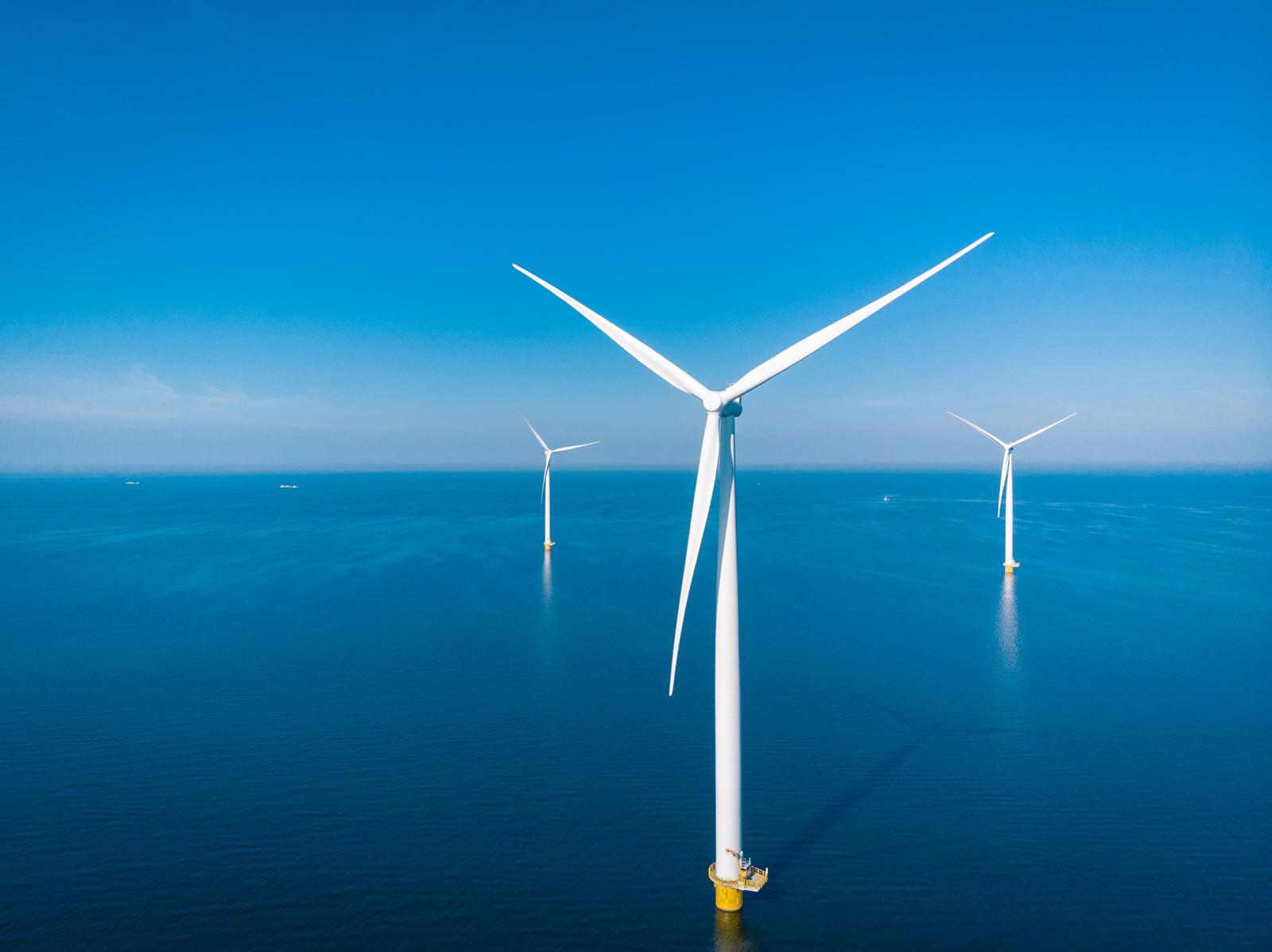
France provides the clearest example of wind power being linked not only to decarbonisation, but to industrial sovereignty. Its new 12 GW tender round, including 10 GW of offshore wind, is important not only because of its scale, but because of the political logic behind it. The French government has explicitly tied renewable deployment to the need to reduce dependence on imported oil and gas while also strengthening Europe’s own manufacturing base.
This is especially evident in the resilience criteria attached to the tender process, which favour European sourced components and limit the role of Chinese inputs in strategically important parts of offshore wind supply chains. In effect, France is treating offshore wind as both an energy asset and an industrial policy tool.This approach reflects a broader French calculation that the energy transition must also protect national and European productive capacity. Rather than simply importing the cheapest equipment available, France is trying to ensure that the growth of renewable power supports domestic and regional industry, from turbine manufacturing to grid equipment and strategic materials. This makes the French case particularly significant; it suggests that future renewable expansion in Europe may increasingly be shaped not only by carbon targets and power prices, but also by resilience, supply-chain control, and geopolitical risk. If this model spreads, France may become a template for a more protectionist and strategically driven phase of the European clean-energy transition.
Wind in Germany
Germany has recently increased its onshore wind auction volumes by an additional 12 GW by 2030. This comes as a direct response to the Hormuz crisis. The German case serves as a direct example of an attempt to diversify energy sources to maintain economic stability amid geopolitical events. Germany’s Minister for Economic Affairs and Energy, Katherina Reiche, explains that the Hormuz crisis evidences how “vulnerable global energy supply chains are and how quickly geopolitical conflicts become real economic risks.” More importantly, she signals that Germany will treat energy policy as security policy. Being susceptible to the volatility of unstable energy markets would ultimately make Germany a “pawn of foreign powers.”
Therefore, increasing wind auction volumes represents Germany’s attempt to reduce its dependence on geographically concentrated fossil fuels in the Middle East. It also has long-lasting implications for the rest of the German economy, protecting domestic industries from price swings that result from these geopolitical events. The German case is interesting because it implies that fast-tracking wind is a matter of national security. As a major player in Europe, Germany's official stance will likely influence the mindset of other EU nations. This could possibly kick-start a wind-fast-tracking movement across the continent.
In short, Germany’s policies, both in recent weeks and in previous years, seem to prioritize insurance for its economy against volatility. While it has stressed the importance of clean energy, the justification of the volume increase appears to be more intended as a hedge against geopolitical conflicts.
Wind in the UK
Developments in the UK evidence how wind energy has been a successful hedge against the recent instability of the energy markets. This has been supported by the increase of the use of wind energy. Wind accounted for around 42% of total UK power supplies during the first three months of 2026, compared to around 33% from the same period in 2025. Higher wind output has allowed utilities to decrease the use of fossil fuels and has helped to soften the blow of the Iran conflict.
Since the 2021-2023 energy crisis began in the UK, the country has added 7.7 GW, as well as 7.6 GW, of new wind and solar power. This new capacity helped to displace additional gas power generation that would’ve been needed. Gas-fired production dropped nearly 26% from March 2025 to March 2026, with gas only contributing to 23% of the UK’s electricity demand, compared to 38% during the beginning of the 2021 crisis. It is estimated that this change has saved the country around £7 million per day compared to 2021. Clearly, wind’s momentum has helped insulate the UK from the volatility of natural gas prices.
Plans to fast-track the AR8 auction round are likely influenced by the success of clean energy during the recent crisis. This momentum for projects will also carry over into the next few years. Recently, King Charles III’s Crown Estate, already with a capacity of 17 GW from offshore wind, announced another leasing round that could accommodate up to 6 GW. The delivery of new wind projects in the future will further reduce the share of gas in the UK’s total energy supply. However, this development will not only affect the UK’s policies but will likely affect those of other European countries as well. It shows how clean energy, especially wind energy, is crucial for softening the uncertainty caused by geopolitical events.
Concluding Statement
Our position is that wind energy is becoming a necessity in Europe, not solely as a source of renewable energy, but as a source of energy independent of geopolitical factors to help secure long-term economic sovereignty. The evidence from France, Germany, and the UK supports this claim. There is much more to wind energy than just decarbonisation, but rather that it is an effective tool that can insulate an economy from outside forces. France, as well as other countries, are attempting to assert industrial sovereignty and prevent Chinese dependence by supporting domestic production of turbine components. Germany has reframed increasing volumes of wind energy as a security policy to prevent foreign dependency, while the UK demonstrated how its wind-heavy grid has helped to absorb the shock of the Hormuz crisis. Now, geopolitical priorities have been combined with environmental ones, making wind a much more significant energy source compared to five years ago.
Our outlook is positive for the next few years. Yes, wind has experienced a decent amount of hurdles, whether it be bottlenecks or delays, that have hindered it from reaching its EU target. However, the Hormuz crisis, along with developing protectionism, have provided geopolitical catalysts for acceleration of projects on the continent. Historically, geopolitical crises have been effective drivers of change, especially the policies and actions taken after the 2021-2023 crisis. We expect the Hormuz crisis to lead to build on these changes, albeit likely with less effect.
Overall, Europe is undergoing a change in which significant investment is being made for a cleaner alternative to fossil fuels. However, it offers upsides that help protect European industries and economies from unexpected threats.
Data Sources
- Reuters — France launches 12 GW renewable tenders under “Made in Europe” push
- Reuters — Record wind output helps shield UK from worst Iran war energy shock
- Reuters — Wind demand surges in Germany as rooftop solar auctions undershoot volume
- Reuters — UK’s Crown Estate to launch new offshore wind leasing round
- European Council — EU policy response to the 2022 energy crisis
- WindEurope — Germany and UK accelerate wind expansion in response to energy crisis